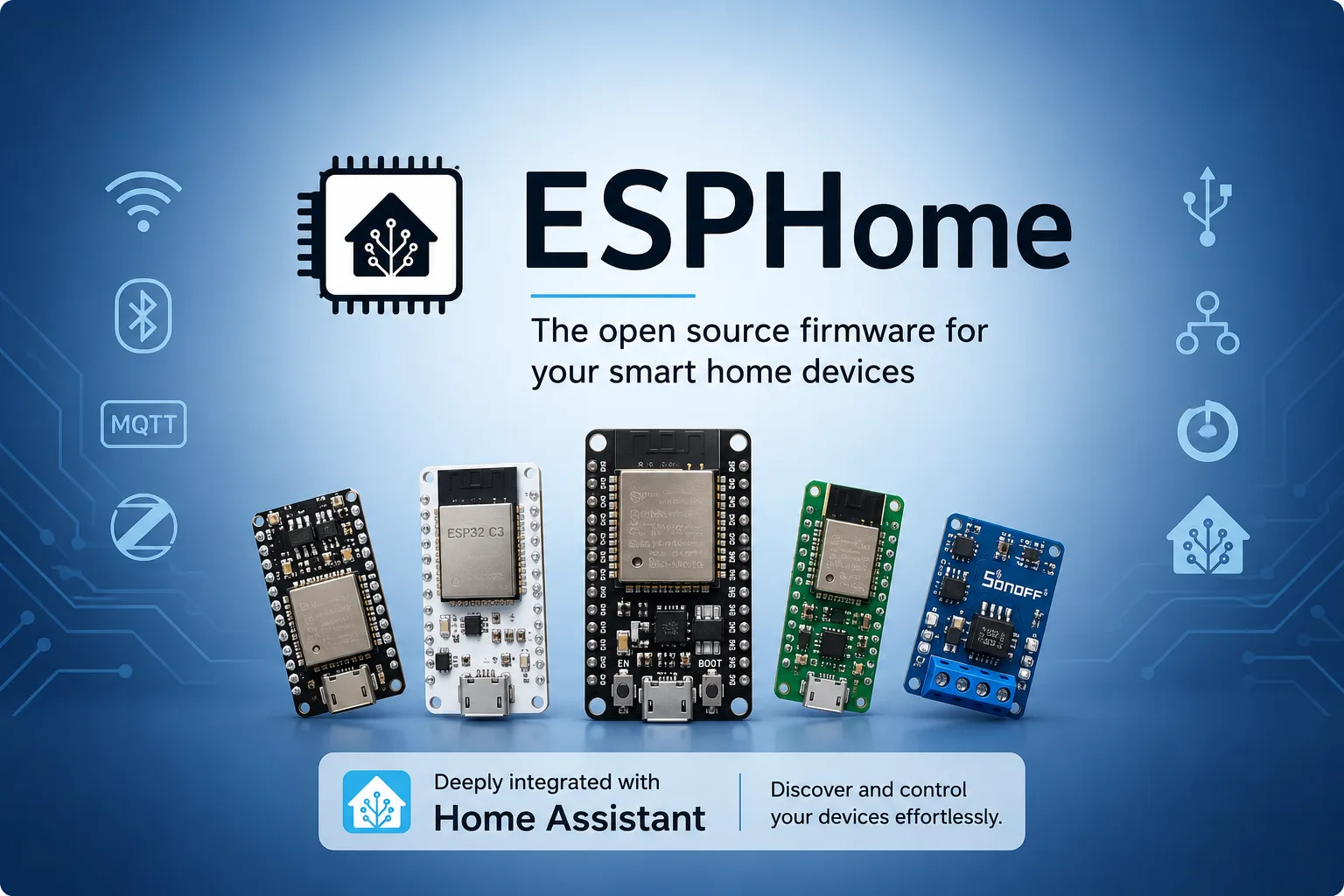
ESPHome is an open-source system for turning microcontrollers and supported boards into smart home devices through YAML configuration rather than hand-written firmware. The project describes support for ESP32, ESP8266, BK72xx, RP2040, and other boards, with remote control through home automation systems and a large component ecosystem for sensors, displays, switches, and related hardware.
Its importance comes from the way it sits between the maker world and day-to-day home automation. For many Home Assistant users, ESPHome has become one of the clearest paths from raw hardware to locally controlled, dashboard-visible devices: define the hardware, compile firmware, flash it, and let Home Assistant discover or connect to it through the native ESPHome API.
Why ESPHome matters now
Open-source home automation has often had a hardware gap. Software platforms can orchestrate lights, sensors, climate devices, buttons, and dashboards, but custom hardware still needs firmware, networking, updates, naming, logging, and reliable integration. ESPHome turns much of that work into declarative configuration.
That is why it has become a de facto leader in open-source hardware enablement for Home Assistant-centered homes. It does not merely support one board family or one kind of sensor. The official material points to a broad ecosystem spanning microcontrollers, ready-made projects, hundreds of components, and a device database. In practical terms, ESPHome has become a bridge between many brands, boards, components, and communication patterns without forcing every user to become an embedded firmware developer.
What ESPHome enables
ESPHome’s core promise is straightforward: write a YAML configuration, compile firmware, flash a supported device, and expose its capabilities to a smart home system. The official docs emphasize several practical pillars:
- simple YAML configuration instead of writing C++ from scratch
- over-the-air updates after the first setup
- support for many sensors, displays, outputs, and other components
- local control without depending on a cloud service
- support across ESP32, ESP8266, RP2040, BK72xx, Realtek RTL87xx, Nordic nRF52, and host-based use cases
The project’s growth is especially visible in its component model. Rather than treating each device as a one-off project, ESPHome gives users a common language for describing sensors, binary sensors, lights, switches, displays, climate devices, Bluetooth proxy setups, and many other building blocks.
The Home Assistant connection
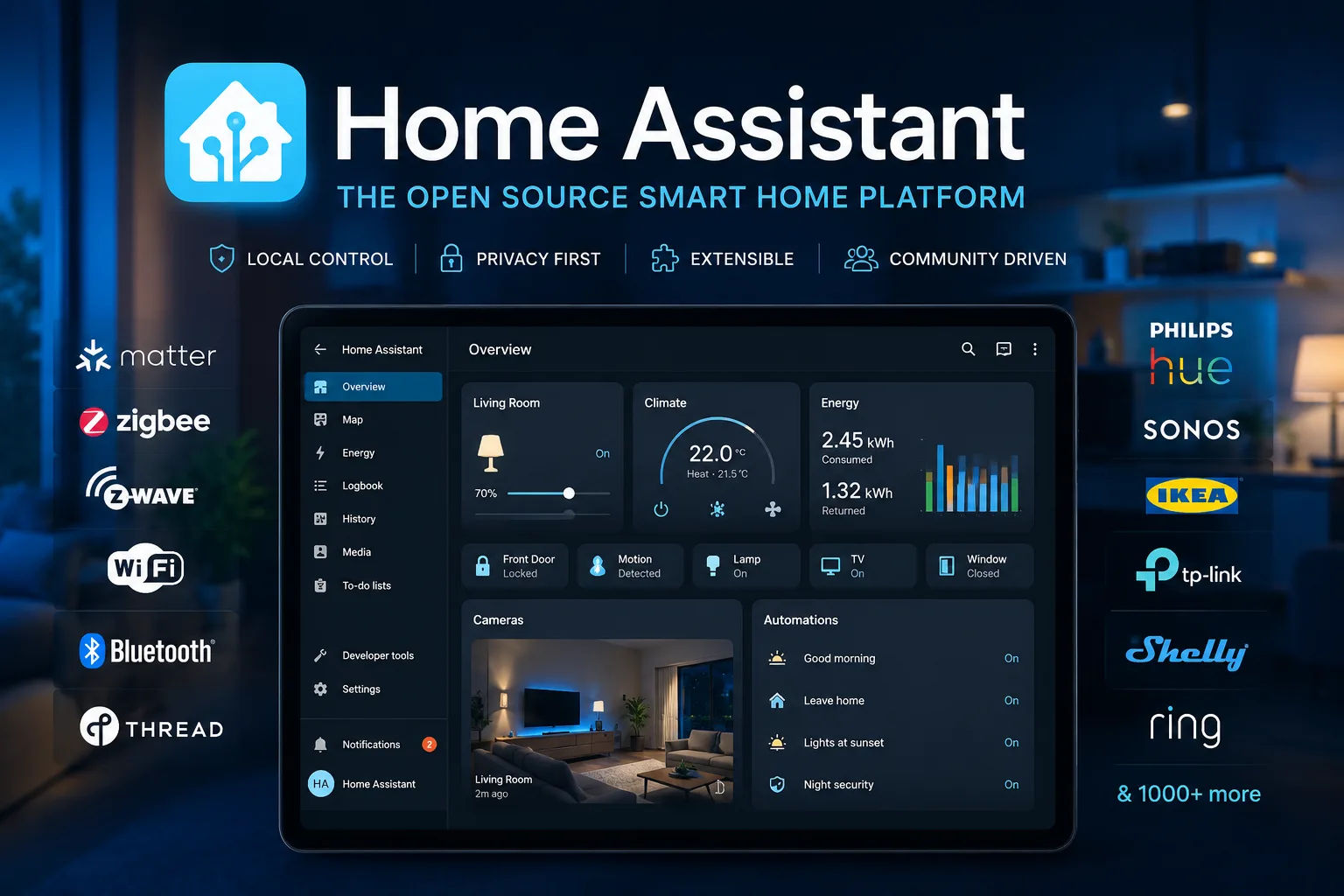
ESPHome is now closely tied to Home Assistant in both workflow and architecture. The ESPHome site presents the Home Assistant add-on as the easiest starting path, while Home Assistant’s own integration documentation describes ESPHome devices connecting directly through the native ESPHome API.
That integration is deeper than a generic polling bridge. Home Assistant maintains a persistent connection to ESPHome devices, receives state changes as they happen, and can expose entities, events, actions, tag scans, and device logs. The native API is designed for local, efficient communication, which is exactly the model many smart home users want: responsive automation without routing every device action through an external cloud.
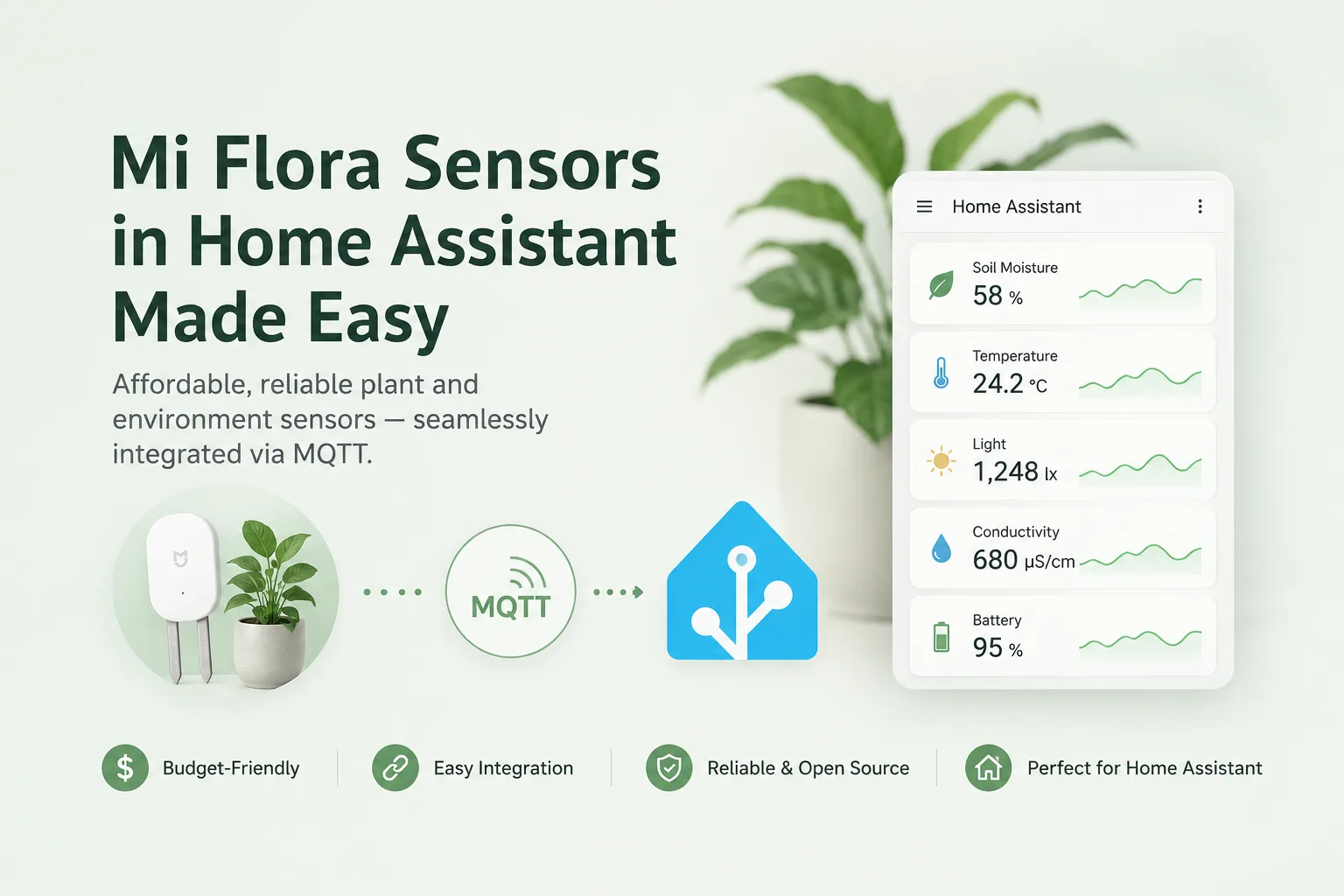
This close fit is one reason ESPHome feels less like an adjacent firmware tool and more like part of the Home Assistant hardware layer. For users already invested in Home Assistant, ESPHome can make DIY sensors, custom panels, Bluetooth proxies, buttons, relays, and niche devices feel like first-class smart home participants.
Best-fit scenarios
ESPHome is strongest when the goal is local, customizable, Home Assistant-friendly hardware. It fits people who want to build a temperature sensor, retrofit a relay, assemble a display, extend Bluetooth range, expose a button panel, or bring a niche device into the same automation model as the rest of the home.
It also suits professional integrators and advanced hobbyists who want repeatable configurations instead of one-off firmware experiments. A YAML file can be reviewed, versioned, reused, and adjusted as the hardware evolves. That makes ESPHome useful not only for tinkering, but also for maintaining a growing fleet of small smart home devices over time.
Adoption notes
The easiest route is usually through Home Assistant, especially for users who already run it. ESPHome’s documentation also supports command-line workflows for people who prefer local development habits or want more control over how configurations are stored and built.
A sensible adoption pattern is to begin with a single low-risk device: one sensor, one relay, or one display. That keeps the hardware, power, Wi-Fi, firmware, and Home Assistant integration steps visible. Once that path works, the same model can scale to more ambitious devices and more complex automations.
Users should also pay attention to naming, encryption keys, update behavior, and recovery access. ESPHome simplifies firmware creation, but the resulting devices are still embedded networked devices that need careful configuration and maintenance.
Limits and trade-offs
ESPHome is approachable, but it is not magic. Users still need compatible hardware, safe wiring, suitable power supplies, and an understanding of what a device is allowed to control. Mains-voltage relays, custom enclosures, and unattended installations require more caution than a basic battery sensor on a desk.
There is also a learning curve around YAML, component options, logs, compilation, and flashing. The abstraction removes much embedded complexity, but troubleshooting can still involve Wi-Fi behavior, board variants, pins, libraries, and hardware quirks. For some commercial devices, a native vendor integration may remain simpler if deep customization is not needed.
Editorial verdict
ESPHome is one of the defining projects in open-source smart home hardware. Its role is not just that it supports popular microcontrollers; it gives Home Assistant users a practical path for converting a huge range of boards, sensors, displays, relays, and custom devices into locally controlled home automation endpoints.
The most important editorial point is the ecosystem effect. ESPHome has grown into a shared language for hardware enablement, while Home Assistant gives those devices a mature automation and dashboard environment. Together, they form one of the strongest open-source stacks for people who want smart home hardware that is configurable, local-first, extensible, and not locked to a single vendor’s cloud.
Primary link
Learn more at: https://github.com/esphome/esphome